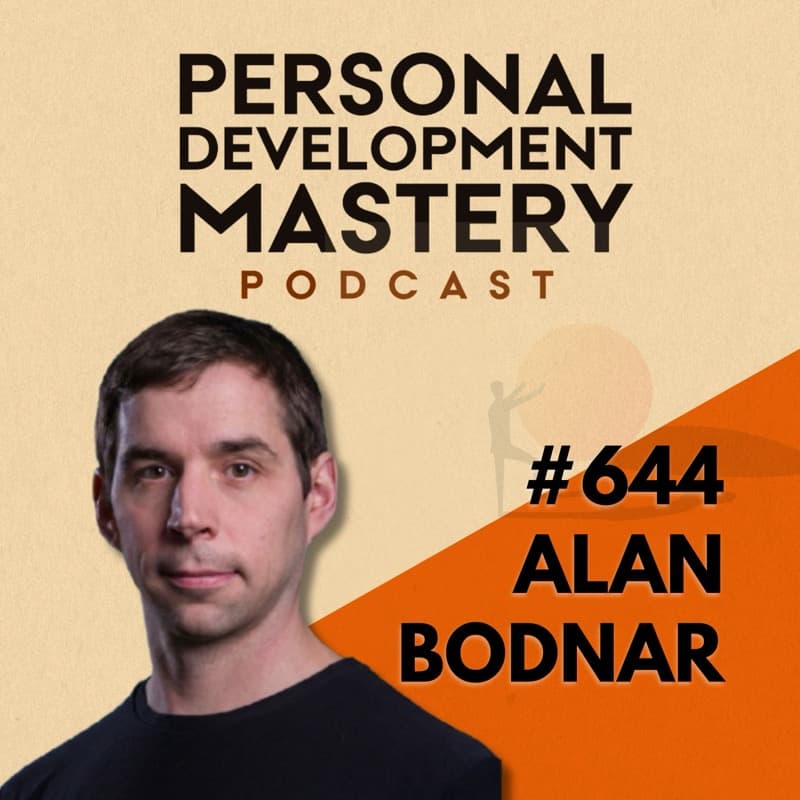
Years ago, I drove home after a long day and arrived without remembering a single turn, a single traffic light, a single decision along the way. My body had done the driving. My mind had been somewhere else entirely. At the time, it felt harmless, just a tired mind on a familiar route. But when I sat down this week with my guest, Alan Bodnar, author of The Self-Driving You, I realised the same thing happens to us constantly, not just behind the wheel of a car, but behind the wheel of our entire life.
The Two Systems That Drive Us
Alan's work is built on something psychologists call dual process theory, popularised by Daniel Kahneman in Thinking Fast and Slow. In simple terms, we have two systems shaping how we experience reality. System one is always on. It scans the environment, reacts instantly, and produces our first response to nearly everything, our emotions, our habits, our opinions, our behaviour. It does, by Alan's estimate, around ninety per cent of the driving.
System two is different. It turns on intermittently. When it is active, we can plan, deliberate, question and exercise genuine self control. This is the part of us that feels like "I". Alan calls it the conscious driver, sitting behind the wheel of the human vehicle, free to step in and change direction at any moment.
The trouble is, most of us never step in. We simply agree with whatever system one decides, and we do it so often that we stop noticing we have a choice at all.
Why Noticing Is Not the Same as Choosing
Here is what struck me most in our conversation. Awareness on its own is not enough. Our attention is constantly being cued by the self-driving system, but most of the time we glance at what it is doing, quietly agree, and let it carry on. Real change requires something more deliberate.
Alan explained that our executive circuits, the part of the brain responsible for directed attention, do not even finish developing until our mid to late twenties. Once they are online, though, we gain a genuine ability to choose where our attention goes, independently of what our automatic system is telling us to notice. And as he put it, wherever attention goes, neural patterns grow. That single sentence has stayed with me since we recorded.
The Breath as the Brake
So how does one actually interrupt a pattern in the moment it is happening, particularly when emotions are running high? Alan's answer was refreshingly simple. He uses the breath.
When we feel that familiar surge of anger or frustration, our body shifts into what he calls sympathetic acceleration, the self-driving system pressing down on the accelerator. Slowing the breath activates the opposite response, the parasympathetic system, our body's own brake. It is a small, physical act, but it interrupts the automatic pattern for just long enough to let the conscious driver take the wheel.
Alan was honest that this is far easier in theory than in practice. He shared that he had tried to give up coffee for an entire year without success, yet this particular week, using the very technique he teaches, it finally worked. Some patterns, he admitted, respond to this practice more readily than others. I appreciated that honesty. It is a mental training exercise, not a magic switch.
It Is Not Personal
Perhaps the part of our conversation I keep returning to is Alan's insistence that none of this is personal. When we fail to override an old pattern, when we reach for the coffee, or raise our voice, or return to a habit we swore we had left behind, it is simply the self-driving system doing what it has always done. It is not a character flaw. It is not evidence that we are somehow broken.
The invitation, then, is to have some grace with ourselves while we practise. Recognise the pattern. Pause long enough to breathe. Choose, where we can, a response that actually serves us. That is the whole practice, repeated patiently, for as long as it takes.
I have not sat inside a self-driving car myself, but after this conversation, I find myself asking a new question throughout my day. Where, right now, am I simply looking out of the window while the vehicle drives itself? And where is it time to take the wheel?
Stand out, don't fit in.